


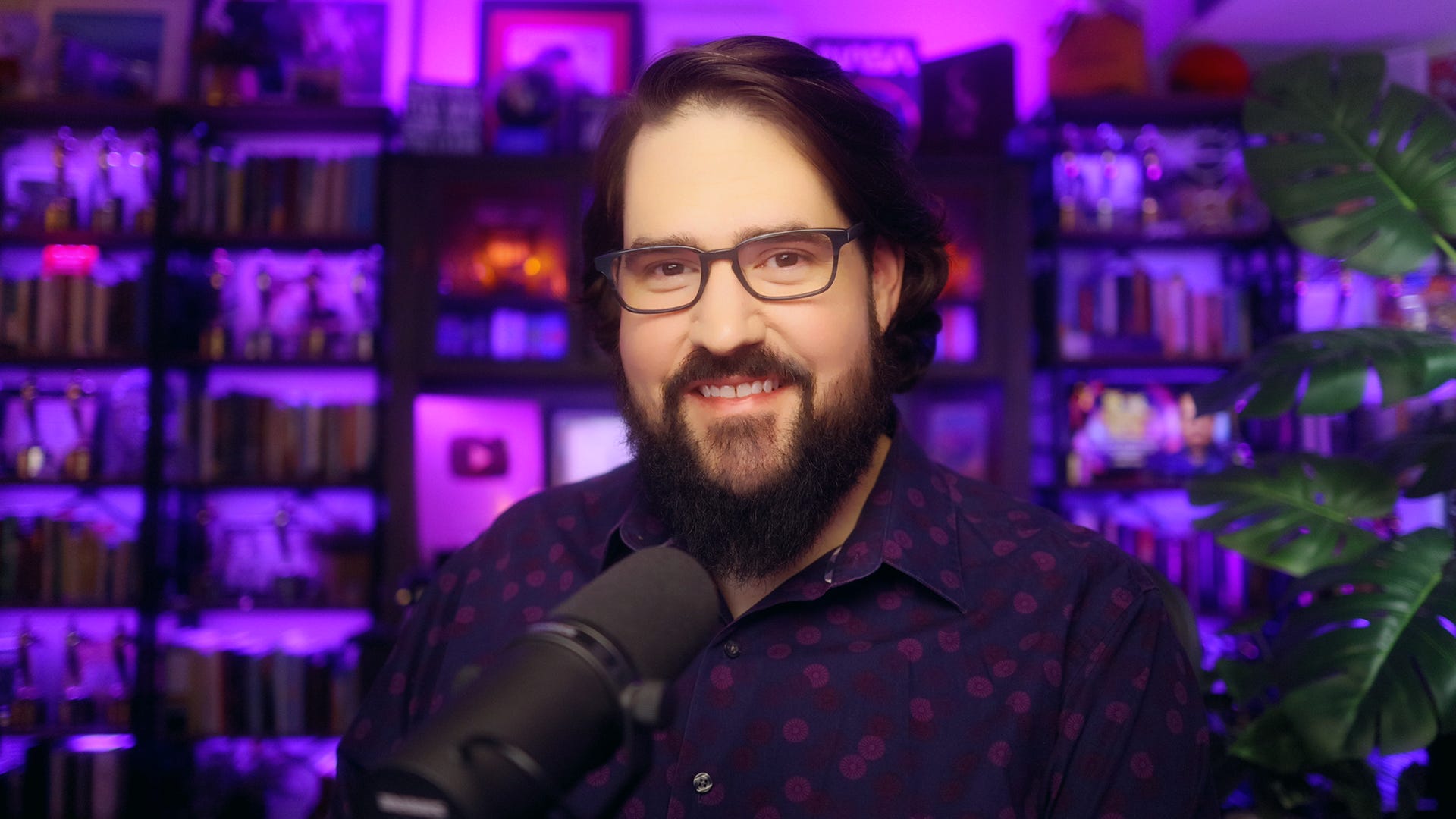
This Was Always the Work.
I have spent my whole life trying to make people look like themselves.
That’s the sentence I couldn’t have written twenty years ago, because I was too busy living it to see it. But looking back now, it’s the only through-line that explains everything.
I was the nerdy creative kid who never quite fit. My dad taught middle school technology, so I got my hands on a digital camera when digital cameras were brand new, and I was hooked. A high school photography class felt like home in a way nothing else did. I skipped the four-year university route, went to art school in Denver for video production, and got out fast because a professor pulled me aside and told me nobody in this industry would ever ask about my degree. They’d only ask what I could do.
So I did a lot. Ad agency. Then the NBC station in Denver, producing on-air graphics for newscasts, winning awards, meeting legends. Somewhere in there, the station’s appearance coach saw my photography and went to bat for me, and I started shooting the official headshots for every anchor and reporter on air. Before long I was flying around the country doing the same thing for stations everywhere.
Here’s what I didn’t understand yet: headshot days were the only days I looked forward to. The talent did too. Something happened in that studio that didn’t happen anywhere else in the building. People walked out with a new sense of themselves. They’d been on television for years and had never actually been seen.
I left TV in 2013 with a shelf full of Emmys and no sense of purpose. Went back to freelance. Burned out. Asked myself the only honest question I had left, which was what do I actually love doing, and the answer was headshots. So I reinvented myself around them, found the best headshot photographer in the world, Peter Hurley, joined his mentorship, and within six months became one of his top associates.
And Peter kept mentioning his mentor. Some guy named Bob Proctor.
I typed the name into Google and the genie came out of the bottle. The white-haired man in the tan suit from The Secret, the one I’d watched in an art school classroom a decade earlier and then completely forgotten. That was the beginning of a wild, deliberate, roller-coaster journey that ended with me serving as Bob’s Creative Director, and later his VP of Creative Media, for the final four years of his life. I produced his events and livestreams, ran his studio, built his video and brand world, and worked with him nearly every day.
Bob taught me most of what I know about goals, self-image, decision, and becoming the person who can hold the thing they want. He also insisted I keep shooting headshots the whole time, and sold them from his stage on my behalf. Even he could see it. The camera work and the personal development work were never two different jobs.
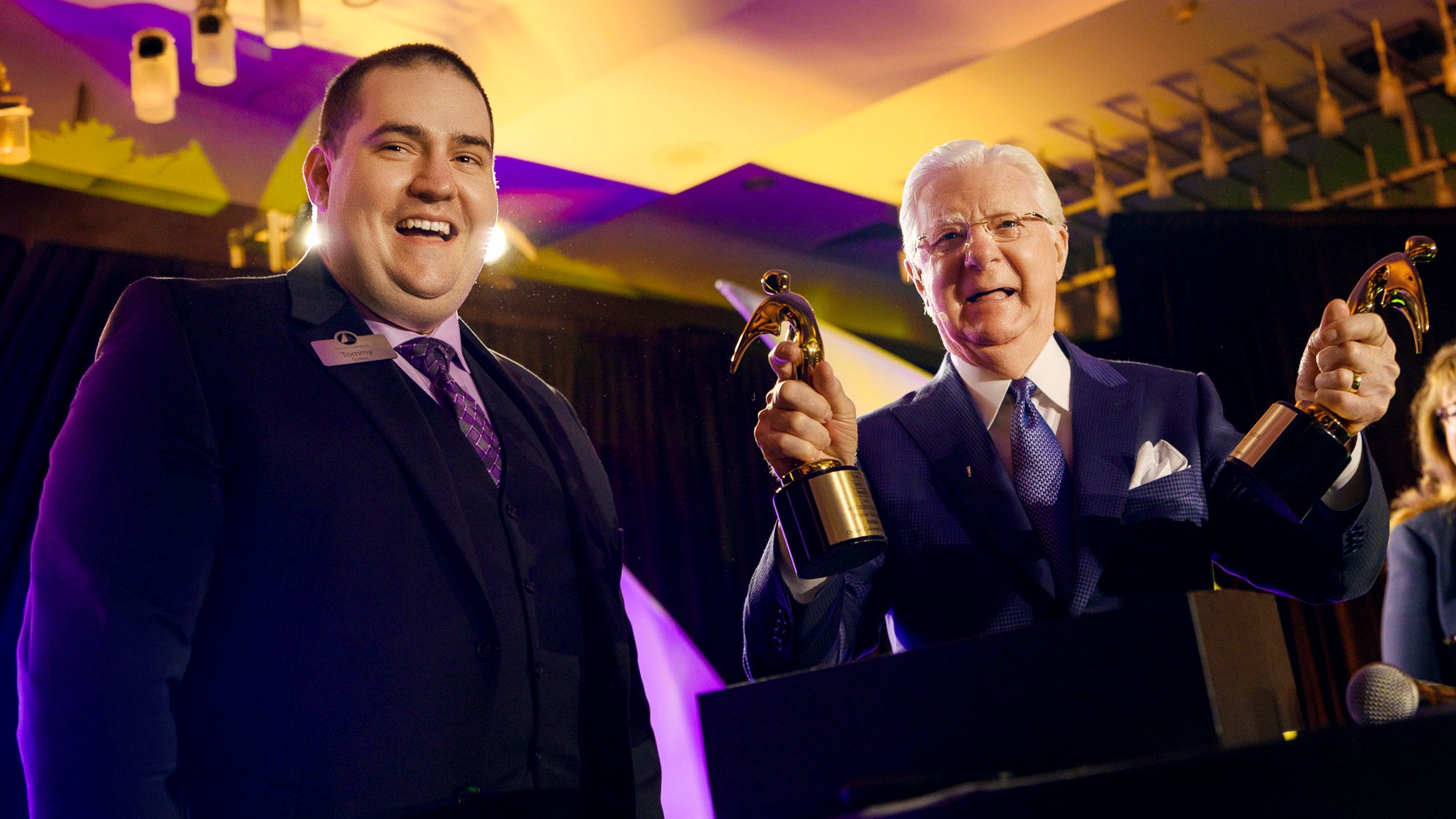
Then we lost him.
The chapter after Bob was not clean or glamorous. There was grief. There was confusion and disappointment, and a long reckoning with the personal development world from the inside, where you can see the shadows most people never get close enough to notice. I did a lot of shadow work in those years. A lot of honesty. That season also led me to Human Design and to Julie Ciardi, to founding The Collier Collective with my husband Monte, to carrying the Proctor lineage forward with Bob’s family, and, maybe most importantly, to finally hearing my own voice instead of everyone else’s.
That’s when the pattern finally clicked. The thing I’d been chasing was never proximity to Bob, and it wasn’t even personal development. It was the work itself. The same work I’d been doing since the first headshot. Helping a person be seen as who they actually are. Bob’s passing didn’t end that work. It handed it back to me as mine.
So I named it. GlamCam Studio™ is what I do now: I design and build on-camera presence for coaches, consultants, speakers, authors, and thought leaders whose authority is real but hasn’t made it through the screen yet. And this publication is where the thinking behind that work lives.
If you’d rather hear someone else say it, Thought Leaders Ethos wrote a short profile of me and this work. The headline is the sentence I’ve been saying for years.


Because here’s what I see over and over, in some of the smartest and most accomplished people I know. They’ve decided they’re bad on camera. They’re not. Most people don’t have a content problem. They have a presence problem. The screen isn’t telling the truth about them, and every little mismatch, the lighting, the sound, the camera angle, the room behind them, is quietly creating micro-doubts in the people they’re trying to reach. Micro-doubts compound. The fix has nothing to do with becoming someone else. It’s making the screen tell the truth about who you already are. If you want to see what that looks like in one person’s life, start with this essay: What Would She Do?
What you’ll find here
The name is the map, so let me tell you what it means.
DESIGNED. The inner work. Who you were designed to be, which is where Human Design comes in. I’m a certified IGNITE Her® Guide in Julie Ciardi’s IGNITE Her Frequencies, so this part isn’t a side interest.And design in the literal sense too, because there’s a lot of it in what I do. Light, lens, room, frame. Everything on your screen was designed by someone. The only question is whether it was designed with intention or just happened by default.
ALIGNED. Congruence. Your inner authority and your outer authority saying the same thing. Being aligned with the work you’re here to do, and with the path you chose and that god/universe/source, whatever you call it, has been leading you toward. When you’re aligned, people can feel it before you say a word.
PRIMED. Ready for prime time. It’s also a nerd joke, because the GlamCam system is built on prime lenses, the cinematic, soft-background, shallow-focus glass that makes the screen feel like film instead of a video call. But mostly it’s this: a lot of the people who find their way here are midlife women, mostly but not only, and the world has a habit of calling them past their prime. I’m here to say no. This is your prime time. Human Design would tell you the same thing. Purpose and meaning don’t wind down in your fifties. That’s where they begin.
So that’s what Designed, Aligned & Primed™ is about: visibility and authority, inner, outer, and on-camera.
The inner work is personal development and Human Design, what I call Personal Development by Design. I love the classic principles, and I’ve watched too many devoted students use one-size-fits-all success advice against themselves. Human Design is the personalization layer that was always missing.
The outer authority is the voice, message, and presence people feel from you. It’s the reason they trust you, follow you, and choose to work with you.
And the on-camera presence is the proving ground, where all of it either makes it through the screen or doesn’t. That’s where The 5 On-Camera Trust Levers live, along with the behind-the-scenes stories from working with legends that taught me how it all fits together.
All of it in service of one thing: helping the real you make it through the screen, so the people already looking for you can finally see you.
Come on in
Subscribe for free and my essays and videos land in your inbox. That’s the whole ask. You’ll get the frameworks, the Bob stories, the client transformations, and the honest version of what I’m learning as I build this.
And when you’re ready for more, there’s a room backstage. The Green Room is where I work with paid subscribers directly: live on-camera clinics, the on-camera presence audit, workshops, gear guides, and the community that’s forming around this work. No pressure and no pitch here. You’ll know when it’s time, and I’ll be glad to see you when you walk in.
📸 Tommy
