


A few days ago I did something almost nobody does anymore. I didn’t send an email. I didn’t fire off a preemptive “hey remember me?” text. I picked up the phone and called a woman out of the blue, someone I hadn’t really spoken to in nearly ten years.
My heart was pounding a little as it rang. I wasn’t even sure the number still worked. I half expected a stranger to answer, or no one at all. But on the second ring, there she was, exactly as I remembered her: “Well, my goodness sake, how are you?!” she said with surprise and delight.
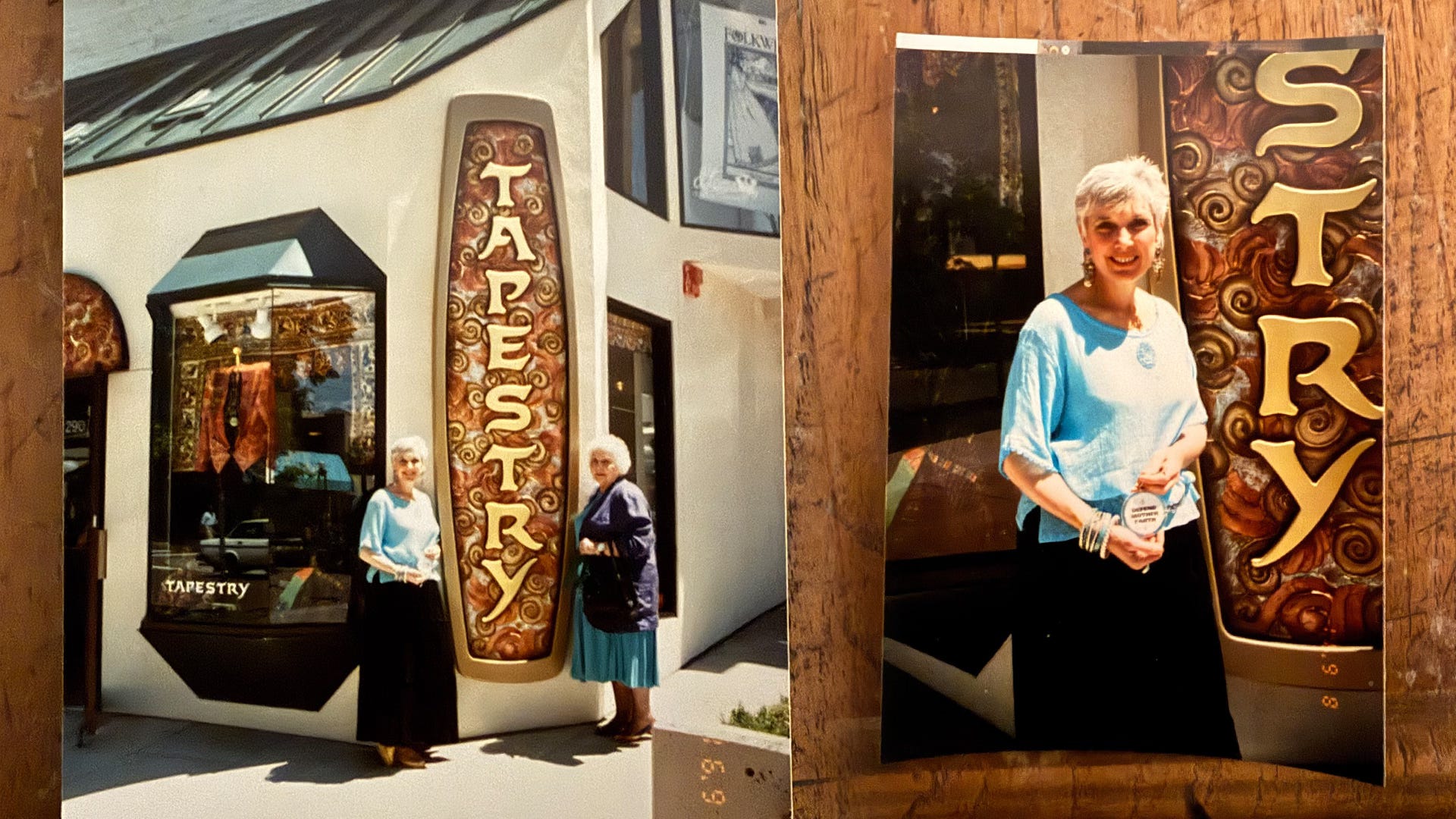
Her name is Carolyn Fineran. She’s eighty-four years old, an artist, an entrepreneur, and a humanitarian, and for decades she’s been one of the major forces in Colorado fashion and well beyond it. She owned a beloved Cherry Creek boutique called Tapestry for twenty-five years, she served in the Peace Corps as a young woman, and in her later years flew to Guatemala to help indigenous weavers bring their work to the world. She still hops a plane to London when it suits her. She is, I’ve come to realize, a big part of the reason I do the work I do now. She didn’t know that. For a long time, neither did I.
Let me take you back to the day I’m talking about…
The shoot
It was May of 2010. Carolyn had closed Tapestry years earlier, and when it closed, something else closed with it. She’d spent a lifetime as a businesswoman, a buyer, a name, someone with a storefront and a reason to get dressed in the morning. She once told a Denver Post reporter, about the day she finally let it go, “My heart stopped being there.” And then that life was gone. In her own words to me, simply: she didn’t have her business anymore, and without it, she wasn’t sure who she was.
She was ready to start again. A new venture, a jewelry line called Gypsies Collection, and a website in the works where the world could see it. She wanted one photograph to mark the moment. Not a headshot. Not a glamour shot. A picture, in her words, “to showcase my new life.”
So my partner in crime Patti and I went to her house.
I should tell you about Patti real quick, because she played a huge role in my early career. For over two decades, Patti Shyne was the appearance coach at 9NEWS KUSA, the NBC affiliate in Denver (and dozens of other stations around the United States), back in the days when stations still had the budget for it and cared enough about their on-air talent to keep a coach on the payroll. She styled and coached the people you watched read the news every night, making sure they always showed up looking their very best. She was the one who first pulled me into this whole world, who saw something in my photography and started sending me toward it. That day at Carolyn’s, Patti worked her magic — hair, makeup, styling. Not to cover Carolyn. To bring her forward.
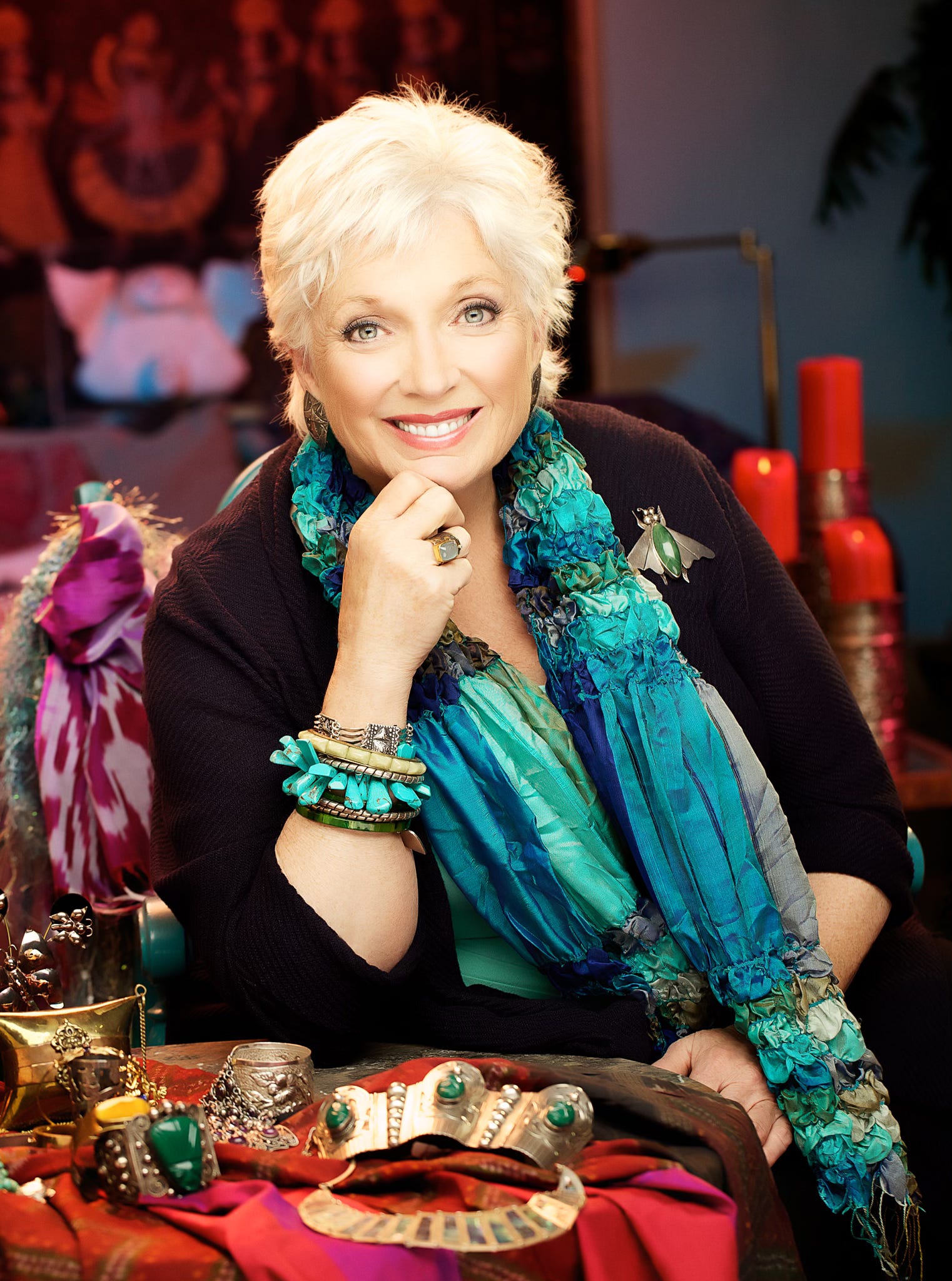
Here’s what I want you to understand about that shoot, because it’s the part that changed me. We didn’t set up a backdrop and start shooting. We slowed all the way down. We spent the better part of a day with Carolyn. We walked through her home, which was like an art and fashion exhibit. We spent time in her studio as she showed us her art, her jewelry, the textiles, the scarves, the countless beautiful things she’d collected over a lifetime. We listened to her stories. And then we did something I had never done before in my life: instead of putting Carolyn in front of a blank studio wall, we built an entire scene out of her own world. Her things. Her light. Her living room, arranged piece by piece until the frame didn’t just contain Carolyn. It told the truth about her.
She named it well when we spoke the other day, all these years later: “It was my personal brand, before anyone ever called it that.”
She was nervous that day. Of course she was. It had been a decade since she’d sat for a portrait that was about her and not about promoting her boutique. Years later she described the feeling exactly: “I was nervous, because it felt like I was revealing myself. And you were really seeing me.”
This was before I shot tethered into a computer, before clients could watch the images appear live on a screen. So Carolyn couldn’t see it happening. She just had to trust us. She had to sit there, exposed, and believe that the people in the room saw something worth capturing, something that matched the picture she carried of herself on the inside.
“It takes a lot of courage to do a picture like that,” she told me. “Because you’re exposed.”
Thankfully, she found the courage that day. We shot several frames by the time we wrapped, but the very first one we captured turned out to be the one. The one she’d still be looking at sixteen years later.
What I mean by “the truth”
I keep using that word, “truth,” and I want to be careful with it, because it’s easy to misunderstand what I actually do.
A cheap camera tells the truth. A bad webcam, harsh unintentional light, a phone held at the wrong angle — they are all brutally honest. They will faithfully report the shadow, the bad angle, the “flaw” you were already self-conscious about. That’s a kind of truth. But it’s a shallow one. It tells the truth of the surface and completely misses the truth of the soul.
Some people assume my work is the opposite problem. That it’s about gluing on glamour. Making someone look like a version of themselves that doesn’t really exist. Smoothing, flattering, faking.
It is not that. It is the reverse of that.
There are two kinds of truth a camera can tell. The truth of the flaws, and the truth of who you are. A bad camera setup is fluent in the first and blind to the second. It catches the flaw of the day and misses the entire human, the spirit within. My work is about building the conditions where the deeper truth, the one the bad setup hides, finally makes it through the lens. Not a prettier you. The real you, the one the surface keeps getting in the way of.
That is the whole thing. That’s what I didn’t have words for in Carolyn’s living room, and what I’ve spent the years since learning to do on purpose.
And here’s the part that gives me chills, something I didn’t learn until the other day. Carolyn had spent twenty-five years running Tapestry by a single motto: “Dressing the spirit, not just the body.” She had built her whole life on the same idea I was reaching for with my camera, and neither of us had ever said it out loud to the other. She was dressing the spirit. I was learning how to photograph it. Same truth, different tools.
What I didn’t have words for yet
I was young. Twenty-four. I didn’t know if I really knew what I was doing. Looking back now, I knew more than I thought. An art school degree and five years of practice had quietly prepared me for the first real, deep, soul-shifting moment I ever made happen with my camera.
Because something unfolded in that living room that I have since witnessed thousands of times, but had never seen before. Carolyn stopped bracing. She surrendered to the process, to the idea that she could be revealed instead of hidden. And the image that came out of it wasn’t flattering in the cheap sense. It was true. The vivid, electric, artistic spirit that lived inside her, the one she was quietly afraid the camera would miss, was right there in the frame. Undeniable.
That was the day my camera stopped being a tool for taking pictures and became something else entirely. A tool for telling the truth about a person. For helping someone see, on the outside, the self they already were on the inside.
And Carolyn was the first person whose whole being-ness I ever brought into a single frame on purpose, with intention, love, and the utmost care. Not just how her face and body looked on camera, but the entire world around her, consciously designed and styled to carry deeper layers of her story. I didn’t think of it as a discipline or an art yet. I just knew the room, and every element in it, had to say something true about her too. Everything I do today, every set I build around a person — so the screen finally shows who they actually are — started right there. She was the first. She just happened to become the proof, too.
The note I’d totally forgotten
When I framed the print for her, I stuck a small handwritten note to the bottom of it. I’d completely forgotten about it. She hadn’t.
On the phone, she walked upstairs to her studio to read it to me, and her voice caught.
The note says: “CAROLYN — WHEN IN DOUBT, LOOK AT THIS PHOTO AND ASK: ‘WHAT WOULD SHE DO?’”
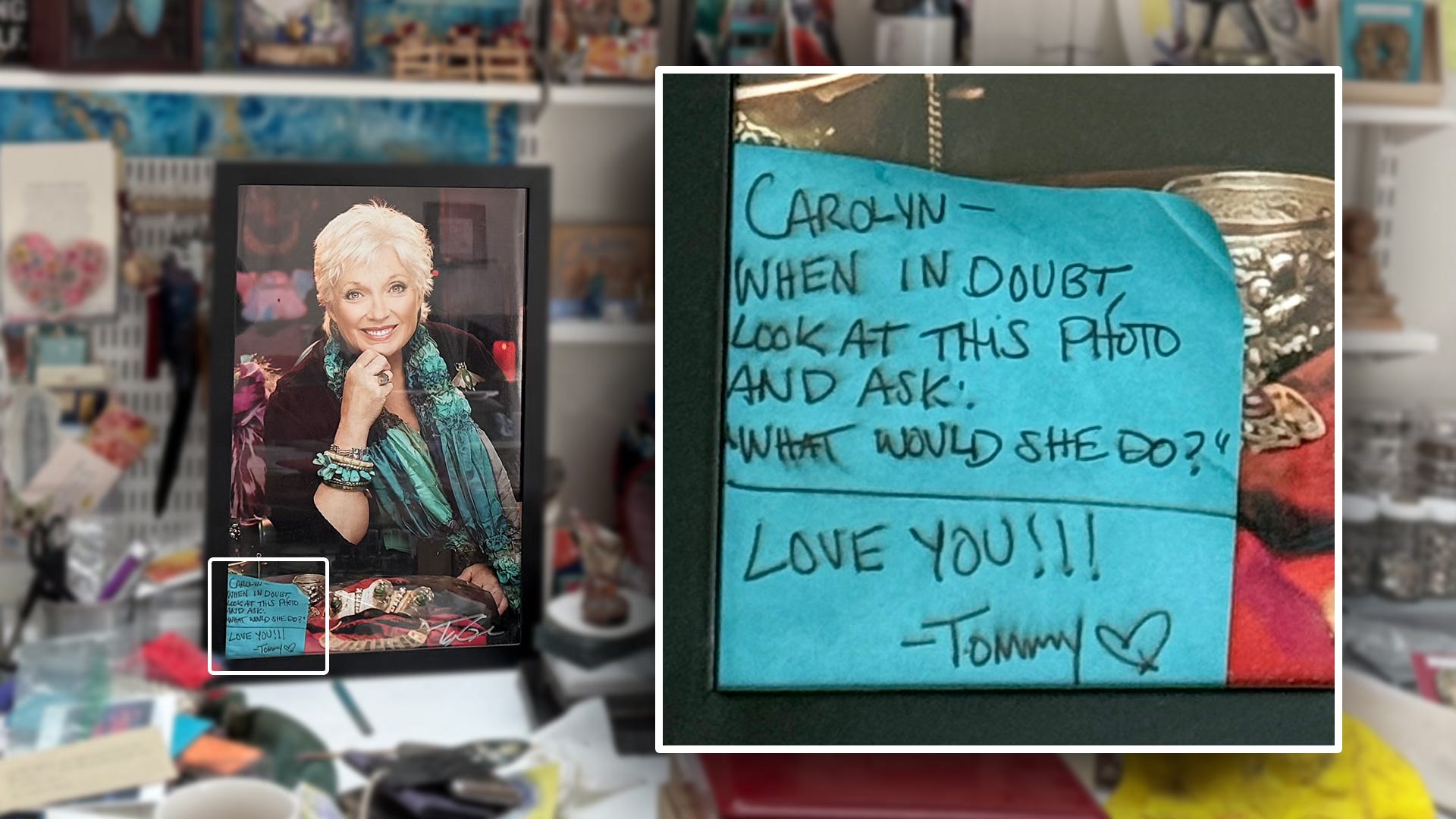
Then she told me why those words landed the way they did. She’d lost her business, and with it her sense of who she was. The photo, and that note, gave her something to steer by.
I had handed a woman a photograph and told her the person in it was someone worth returning to. Not someone to become, because she had already been that woman her whole life. Someone she’d simply lost sight of. Someone worth finding her way back to, again and again. And she believed me.
For sixteen years.
“Tommy, I look at that picture every day,” she said. “I have the big one you framed for me up in my studio. And on days when I wonder who I am, I look at it and go, ‘Oh, there she is.’”
There she is…
In all the years since, I have built my whole life’s work around that exact idea, and I never once told her that. She said it back to me, on her own, sixteen years later, about a photograph that’s been hanging in her studio the entire time.
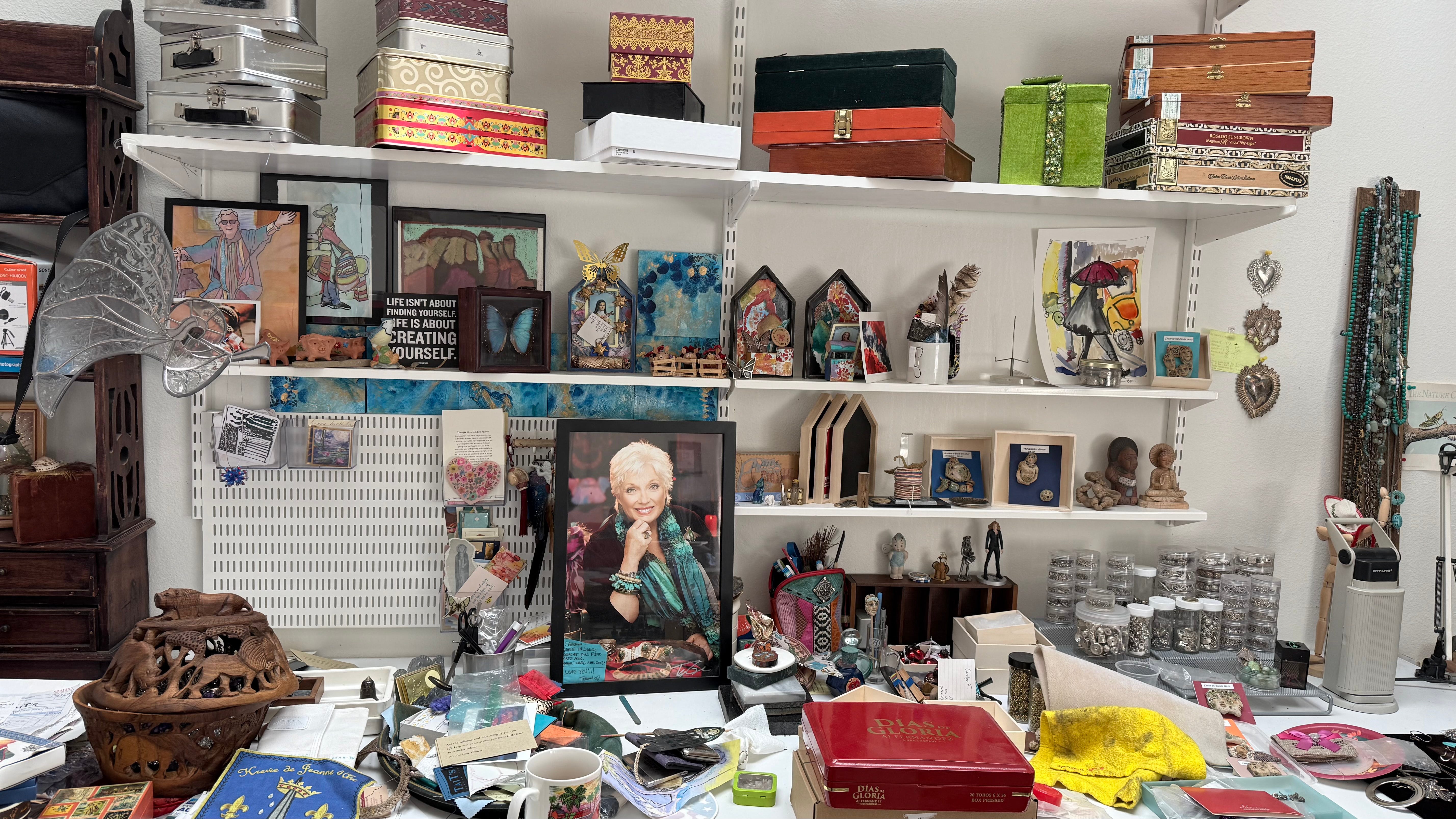
She’s eighty-four now, and her life is full. Her wonderful husband passed many years ago, but she still lives her beautiful life in the same house in Cherry Creek. It’s an artist’s house, a sanctuary, every corner of it holding something beautiful she’s collected or made. She still creates. She still buys and sells beautiful things. She still travels. And she told me she takes thousands of selfies, and then she told me why, and I haven’t stopped thinking about it: she takes them, she said, because she wants to know if she’s still here.
And then she said the truest thing anyone has ever said to me about my own work, without any idea that’s what she was doing. She could always see herself in the mirror, she said. But it’s through photographs that she sees who she is.
That is the distinction I’ve spent my career chasing. The mirror shows you your face, your body. A photograph, made by someone who actually sees you, can show you your self. For Carolyn, the difference between those two things was the difference between wondering who she was and remembering.
Why I’m telling you this
I work now with accomplished humans, women mostly, whose problem is not so different from Carolyn’s that day. Women with real authority, real wisdom, a real body of work. And so many of them have quietly decided they are “bad on camera.” That they’re not photogenic. That they need to lose the weight, or feel more confident, or somehow become someone else before they’ll let themselves be truly seen.
I want to offer you what that living room photoshoot with Carolyn taught me. It may not be you. It may be that nothing around you has been designed to tell the truth about you yet. The vivid, capable, magnetic person you know yourself to be, the one your clients feel the moment you walk into the room, in person or on a screen, she might simply not be making it through. Not because she isn’t there. Because the setup is just taking a picture instead of telling the truth.
There is a difference between being photographed and being seen. Carolyn felt it the moment we stopped pointing a camera at her and started designing a scene that told the truth about her. And once you’ve been seen like that, really seen, you can’t unsee it. You stop fighting the camera. You start showing up. Because the version of you on the screen is finally the one you’ve known you were all along.
One more thing
Near the end of our call, Carolyn told me she’s being told, by more than one person now, that she should be writing a book and speaking on stages. At eighty-four, she is stepping into a brand new act, again. And about my calling her out of nowhere after all these years, she said this:
“You and I are both smart enough to know that when it’s time, it’s time. And to have you call me sixteen years later? I think it’s time.”
The photograph is still doing its job. It’s still telling her the truth on the mornings she forgets it.
If any part of this felt like it was about you, stay close. There’s a lot more coming, and I’d love for you to subscribe so you don’t miss it. And when you’re ready to be seen accurately, to have your audience’s screens finally tell the truth about the authority you already carry, there will be a door.
There she is. There you are. I can’t wait for the world to see you.
P.S. — Meet Carolyn.
Carolyn Fineran is still creating, still curating, still finding beautiful things and putting them into the world. Her jewelry line, Gypsies Collection, is a lifetime of taste in one place. If this story moved you, go say hello on her Substack and have a look around her gorgeous collection on her Etsy page.
Tommy, I love hearing about you capturing Carolyn so she could see herself through your eyes. So beautiful and profound. You do have the gift of sight, straight through to the soul. You and Carolyn were destined to mirror each other's gifts back to one another by being together. The greatest blessing of all is that you were both messengers for each other.
I feel like you've done that for me with my video setup and by designing my environment. You've created a space that is so "Me" I could never have imagined it! I love being in my space now. You have truly opened up my world from afar and become a trusted friend. It's so much deeper than photography - you transform lives with your huge heart and stunning gift of soulful sight. I'm so grateful for you and this is an amazing story. But of course you would have a story to share like this. 🩷
Tommy…you are such an inspiration…and writing about our wonderful experiences comes as a reminder of what’s important…I think it’s my time too, to jump into making dreams come true. Age is just a number but not using gifts is such a waste of our precious time remaining! Love your writing/storytelling. This is just the start of something new!